I'm fully into that most anxious and annoying of pre-op stages, paranoia. Here we are just coming out of cold season, and I flinch every time I hear someone coughing that rattley, "I've-had-this-cold-for-a-month" sort of cough. I had a day (that I'm now convinced is to be blamed on early spring blooms) where I was quite stuffed up with a scratchy throat and all I could do was obsess over it and whether I was allowed to take Cold-FX in my crucial 2 week pre-op period.
The worst part is that I've done something to my teeth -

Sunday, March 27, 2011

Friday, February 11, 2011
A Hard Day and Night
I've been inspired lately by some recent posts by my "bod blog" compatriot Sara (at the Single Gal's Guide to RA)... and to be honest, depressed by own everyday life to the point that I think it might be therapeutic to share it (and thereby staving off my own insanity).
6:45am. iPhone goes off on the church bells carillon.
My very first conscious sensation is pain. I fell asleep in one of the many verboten positions - this time it was the ever-deceptive fully-supine position. Seduced by the endorphin high of stretching out after sitting all day, I laid down flat on my back (Puppy’s also a fan, because it gives her better face-licking access). I don’t move while sleeping, so as my joint contractures spasmed during the night, it pulled my spine into a C-shape up off the bed. Getting out of this position is excruciating and involves a lot of flailing around for something to grip to help me turn over. I finally roll onto my side and breathe, realizing it's going to be that sort of morning. There's nothing quite so demoralizing as waking up in more pain than you went to sleep with.
6:45am. iPhone goes off on the church bells carillon.
My very first conscious sensation is pain. I fell asleep in one of the many verboten positions - this time it was the ever-deceptive fully-supine position. Seduced by the endorphin high of stretching out after sitting all day, I laid down flat on my back (Puppy’s also a fan, because it gives her better face-licking access). I don’t move while sleeping, so as my joint contractures spasmed during the night, it pulled my spine into a C-shape up off the bed. Getting out of this position is excruciating and involves a lot of flailing around for something to grip to help me turn over. I finally roll onto my side and breathe, realizing it's going to be that sort of morning. There's nothing quite so demoralizing as waking up in more pain than you went to sleep with.
Sunday, February 6, 2011
Day in the life
Went to bed last night with plans to go up to the university in the morning to use the library and get some words on the page. Woke up hoping to survive the next few hours. Last night I took the regular slow-release pill and a short-acting pill to make me comfortable enough to lie in one position so I could fall asleep. Sometimes this works, and I can make it until the next evening before I need to take anything else. My pump keeps ticking along silently, under my skin, taking away most of the hypersensitivity and muscle spasms in my left leg. Friday I woke up after four hours of restless sleep and a (prescribed) drug hangover.
I hate to put it that dramatically but that's how un-sexy my life is at times. Why would I take any of these drugs if I didn't have to?
 A recent CBC Radio documentary on The Current called The Blues & I: The Story of Laura Smith (do listen to it at this link, if only to hear Smith's absolutely STUNNING voice) painted a picture of the life of one talented Canadian woman who experienced a series of accidents that left her in chronic pain. I listened with great interest because (as most people who'd read this blog would know) my chronic pain story started when I was 24 and has taken some recent turns for the worse.
Sometimes I feel like every other illness has a champion, that cancer survivors, people living with HIV/AIDS, Cystic Fibrosis, and everything in between are seen by the world as courageous heroes, while even the term "chronic pain" seems somehow... boring. Lazy. Uninteresting. Much of this is because there are many ways people develop chronic pain, and there are people who have chronic pain due to unclear causes that sometimes trip a sort of societal "bullshit meter." People wonder whether it's real, because they can't see it or catch it. People wonder what we are really "survivors" of after all, when (as we'd love to tell the world) people with chronic pain can (sometimes) work, have families, and (mostly) function in society? Even I who have a visible, understandable disability feel like it's hard to have people understand its impact on me when I can't show them chronic pain, beyond the incision scar on my belly where they put the pump in. So to hear it profiled for no particular reason on a very well-respected radio documentary and newsmagazine show made me sit up and take notice.
Most of the documentary was great. Laura's voice was stunning, haunting, gorgeous. I wanted to wrap myself in it. I loved that they wove her voice through the narration, never creating an artificial "before" and "after" in her story - just a whole, talented person and the journey she took. However, as the documentary described Smith's experience with chronic pain and narcotics, it started to go off the rails. Understandably, this is Laura Smith's story, so they describe her life and her experience, but the documentary journalist took one woman's story and started to make some rather hyperbolic and stereotypical statements - of the type we'd expect from the USA where any use of opioids is considered very suspect and indicative of drug abuse.
Laura had had three accidents which left her in chronic pain. Now we don't know whether she sought effective therapies between the accidents, but at least with the last one, she didn't even go to a doctor. The first step of dealing with pain is determining whether it even has to be chronic - ie whether it can be treated. Any multi-modal pain clinic will tell you that they look for causes of pain first, to see if it can be fixed first.
Secondly, it sounds like Laura didn't get reasonable pain treatment which played a large role in her experience of dependence on methadone. Having tried several opioid medicines which were very effective but caused side effects she couldn't tolerate, they didn't indicate whether any similar drugs or other delivery methods were tried, which often have fewer side effects. Fentanyl is a powerful opioid which comes in a transdermal patch which can often reduce the side effects people experience, and even in very serious pain, intrathecal pumps or stimulators deliver pain with fewer side-effects.
Even during the post-documentary discussion with host Anna-Maria Tremonti, journalist Anne Silversides mentions that the standard of care recommends using a variety of treatment modalities, including exploring anti-depressants (which can be effective for nerve-related pain as well as treating some of the emotional and mood effects of having long-term pain), physical activity and alternative therapies like chiropractic. As far as I know, these are usually tried at the outset of proper pain treatment, not at the end of the road. Opioid treatment, and alternative delivery methods like patches and pumps are 2nd and 3rd line options, not first steps.
From everything they told us about Laura Smith's story, it sounds more like an example of inadequate access to or provision of pain treatment than an indication of the evils of opioid use. Doctors that prescribe a powerful and very addictive drug like methadone to someone with chronic pain who doesn't even experience much of a benefit from it is clearly out of his or her league and should be referring the patient on to specialist care so that - at the very least - the methadone use is monitored and, as Silversides indicated the medical expert from Dalhousie University said, an action plan is in place with goals for the opioid therapy.
Laura's experience of methadone indicates that it both wasn't helpful for her and that she wasn't receiving support to titrate it or find a more effective option, or addressing her access to other therapies:
Silversides goes on to describe that Smith is now back on her feet after going through a detox program to get her off of the methadone, combined with chiropractic care and alternative treatments. These are the first steps, not the last, in adequate pain treatment. The fact that these interventions are highlighted as the magic cures after the evil opioid therapies is short-sighted. Treatments like these don't work for that many people, or we wouldn't have need for drugs like opioids. It also highlights a gap in our healthcare system that the cheapest first line treatments aren't available for those who have low incomes.
The journalist also missed the boat completely on the ways the best evidence suggests to treat pain. The journalist did not speak to the head of whatever multi-disciplinary pain clinic is in Nova Scotia - and if there isn't one, why didn't she point that out, instead of vilifying opioids, which for SOME are the most effective way to deal with pain? Why didn't she interview a pain specialist instead of one not specifically trained in pain who is an academic professor of medicine who would know about guidelines but not their clinical application? Most of what bothers me is the way Anne Silversides uses simplistic and judgement-laden phrases to describe Laura Smith's transition from opioid use to her current state, using prolotherapy and chiropractic and having gone through detox.
Later in the post-documentary interview, Anne Silversides makes quite a statement - which I can only assume is based on comments from the medical expert from Dalhousie University:
Here are the facts.
- The guidelines indicated by the journalist and her medical expert are reached by consensus because the evidence is not complete, but exhaustive reviews of the evidence and its quality have been performed by the American Pain Society, and candian guidelines issued who have released clinical practice guidelines based on the evidence and suggested areas that need more research.
- Because the evidence isn't complete does not mean the therapy is in question. It means that the therapy has been seen to work in certain situations or when prescribed to certain populations but more research is needed to refine the data. In order to undertake research, scientists and doctors need a pretty high degree of clinical suspicion about their hypothesis.
- The implication in this radio spot was that guidelines indicated that opioids aren't really effective (which doesn't jive with research evidence reviewed by the American Pain Society) and that canadian guidelines indicate that using alternative methods are important (which is true but ignores a detailed guideline based on research evidence issued by the Canadian Pain Society.)
Though I'm really glad that the issue came up on this show, I strongly urge The Current to avoid this sort of inflammatory depiction of a somewhat controversial health problem without getting a more nuanced picture of the context and interviewing medical experts on the actual topic, not just on research evidence in general.
I hate to put it that dramatically but that's how un-sexy my life is at times. Why would I take any of these drugs if I didn't have to?
A recent CBC Radio documentary on The Current called The Blues & I: The Story of Laura Smith (do listen to it at this link, if only to hear Smith's absolutely STUNNING voice) painted a picture of the life of one talented Canadian woman who experienced a series of accidents that left her in chronic pain. I listened with great interest because (as most people who'd read this blog would know) my chronic pain story started when I was 24 and has taken some recent turns for the worse.Sometimes I feel like every other illness has a champion, that cancer survivors, people living with HIV/AIDS, Cystic Fibrosis, and everything in between are seen by the world as courageous heroes, while even the term "chronic pain" seems somehow... boring. Lazy. Uninteresting. Much of this is because there are many ways people develop chronic pain, and there are people who have chronic pain due to unclear causes that sometimes trip a sort of societal "bullshit meter." People wonder whether it's real, because they can't see it or catch it. People wonder what we are really "survivors" of after all, when (as we'd love to tell the world) people with chronic pain can (sometimes) work, have families, and (mostly) function in society? Even I who have a visible, understandable disability feel like it's hard to have people understand its impact on me when I can't show them chronic pain, beyond the incision scar on my belly where they put the pump in. So to hear it profiled for no particular reason on a very well-respected radio documentary and newsmagazine show made me sit up and take notice.
Most of the documentary was great. Laura's voice was stunning, haunting, gorgeous. I wanted to wrap myself in it. I loved that they wove her voice through the narration, never creating an artificial "before" and "after" in her story - just a whole, talented person and the journey she took. However, as the documentary described Smith's experience with chronic pain and narcotics, it started to go off the rails. Understandably, this is Laura Smith's story, so they describe her life and her experience, but the documentary journalist took one woman's story and started to make some rather hyperbolic and stereotypical statements - of the type we'd expect from the USA where any use of opioids is considered very suspect and indicative of drug abuse.
Laura had had three accidents which left her in chronic pain. Now we don't know whether she sought effective therapies between the accidents, but at least with the last one, she didn't even go to a doctor. The first step of dealing with pain is determining whether it even has to be chronic - ie whether it can be treated. Any multi-modal pain clinic will tell you that they look for causes of pain first, to see if it can be fixed first.
Secondly, it sounds like Laura didn't get reasonable pain treatment which played a large role in her experience of dependence on methadone. Having tried several opioid medicines which were very effective but caused side effects she couldn't tolerate, they didn't indicate whether any similar drugs or other delivery methods were tried, which often have fewer side effects. Fentanyl is a powerful opioid which comes in a transdermal patch which can often reduce the side effects people experience, and even in very serious pain, intrathecal pumps or stimulators deliver pain with fewer side-effects.
Even during the post-documentary discussion with host Anna-Maria Tremonti, journalist Anne Silversides mentions that the standard of care recommends using a variety of treatment modalities, including exploring anti-depressants (which can be effective for nerve-related pain as well as treating some of the emotional and mood effects of having long-term pain), physical activity and alternative therapies like chiropractic. As far as I know, these are usually tried at the outset of proper pain treatment, not at the end of the road. Opioid treatment, and alternative delivery methods like patches and pumps are 2nd and 3rd line options, not first steps.
From everything they told us about Laura Smith's story, it sounds more like an example of inadequate access to or provision of pain treatment than an indication of the evils of opioid use. Doctors that prescribe a powerful and very addictive drug like methadone to someone with chronic pain who doesn't even experience much of a benefit from it is clearly out of his or her league and should be referring the patient on to specialist care so that - at the very least - the methadone use is monitored and, as Silversides indicated the medical expert from Dalhousie University said, an action plan is in place with goals for the opioid therapy.
Laura's experience of methadone indicates that it both wasn't helpful for her and that she wasn't receiving support to titrate it or find a more effective option, or addressing her access to other therapies:
I didn't notice the drug at all. In terms of sensations but it wasn't having a great effect with pain. I would have a or an hour or two hours here and there, I kept increasing the dose here and there would continued to increase the dose through may and june, little bits. I thought methadone was the end of the line for me, in terms of my options, because I certainly couldn't afford alternative therapies.I ask again: why was this portrayed as a story about the evils of opioids in pain therapy when it seems more like a story about lack of adequate medical care and access to mental and physical healthcare for chronic pain?
(...)
When you're always, always, always fighting with yourself and your body, and your choices.... I lost my ability to envision myself in the world each day. All I was was a person in pain, and a person on drugs. But I was afraid to stop - because of the messages I'd received was that methadone was the end of the line.
Silversides goes on to describe that Smith is now back on her feet after going through a detox program to get her off of the methadone, combined with chiropractic care and alternative treatments. These are the first steps, not the last, in adequate pain treatment. The fact that these interventions are highlighted as the magic cures after the evil opioid therapies is short-sighted. Treatments like these don't work for that many people, or we wouldn't have need for drugs like opioids. It also highlights a gap in our healthcare system that the cheapest first line treatments aren't available for those who have low incomes.
The journalist also missed the boat completely on the ways the best evidence suggests to treat pain. The journalist did not speak to the head of whatever multi-disciplinary pain clinic is in Nova Scotia - and if there isn't one, why didn't she point that out, instead of vilifying opioids, which for SOME are the most effective way to deal with pain? Why didn't she interview a pain specialist instead of one not specifically trained in pain who is an academic professor of medicine who would know about guidelines but not their clinical application? Most of what bothers me is the way Anne Silversides uses simplistic and judgement-laden phrases to describe Laura Smith's transition from opioid use to her current state, using prolotherapy and chiropractic and having gone through detox.
Later in the post-documentary interview, Anne Silversides makes quite a statement - which I can only assume is based on comments from the medical expert from Dalhousie University:
In fact, the use of opioids for chronic, non-cancer pain is quite controversial and there's not a lot of evidence that to support their use.This kind of generalization drives me up the wall - not only because it's wrong, but because it popularizes a stereotype that people who are on opioids for chronic pain are not only addicted or about to be, it doesn't accurately distinguish between physical dependence and psychosocial dependence - which is better described as addiction. I don't want to take the drugs I take to remove enough pain for me to function. In fact, I forget them sometimes and then I pay for them with "rebound pain" (which by the way tells me that opioids are quite effective for my pain), but if I stopped taking them suddenly I would go through physical withdrawal unless I tapered off gradually. This is true of many types of drugs, including drugs for seizures, migraines, depression and lipids, and not an indication of psychosocial (pathological) addiction.
That's right, a lot of patients, and maybe even the majority, can't tolerate the side effects like nausea, constipation and a kind of mental fogginess. The effectiveness of the drugs to combat pain - and that's when they do work - can diminish over time. In fact, like Laura with methadone and others with Oxycontin, people can develop a dependence that can make quitting the drugs really quite difficult.
Here are the facts.
- The guidelines indicated by the journalist and her medical expert are reached by consensus because the evidence is not complete, but exhaustive reviews of the evidence and its quality have been performed by the American Pain Society, and candian guidelines issued who have released clinical practice guidelines based on the evidence and suggested areas that need more research.
- Because the evidence isn't complete does not mean the therapy is in question. It means that the therapy has been seen to work in certain situations or when prescribed to certain populations but more research is needed to refine the data. In order to undertake research, scientists and doctors need a pretty high degree of clinical suspicion about their hypothesis.
- The implication in this radio spot was that guidelines indicated that opioids aren't really effective (which doesn't jive with research evidence reviewed by the American Pain Society) and that canadian guidelines indicate that using alternative methods are important (which is true but ignores a detailed guideline based on research evidence issued by the Canadian Pain Society.)
Though I'm really glad that the issue came up on this show, I strongly urge The Current to avoid this sort of inflammatory depiction of a somewhat controversial health problem without getting a more nuanced picture of the context and interviewing medical experts on the actual topic, not just on research evidence in general.
Sunday, January 16, 2011
Narcolepsy is Hot
Yesterday I fell asleep, abruptly, while calling Puppy to come. She's hard to get out of bed, and often requires a good, stern command for her to get up and come to me... sometimes repeated. (Yes, I know. I'm a deficient pup parent.)
So I gave her the command and waited for her to come, and the next I knew, she was curled back up a micrometre closer than she was before, and to my surprise I realized that I'd fallen asleep for a few seconds.
While this might be helpful at cocktail parties - I could do this while boring people drone on, use it to keep up my energy for the fun bits - it's a really strange and unnerving effect of three of the drugs I take for pain and muscle spasms.
Not to mention it undermines my pet parenting.
So I gave her the command and waited for her to come, and the next I knew, she was curled back up a micrometre closer than she was before, and to my surprise I realized that I'd fallen asleep for a few seconds.
While this might be helpful at cocktail parties - I could do this while boring people drone on, use it to keep up my energy for the fun bits - it's a really strange and unnerving effect of three of the drugs I take for pain and muscle spasms.
Not to mention it undermines my pet parenting.
Monday, January 10, 2011
Wierd Spider Sternum Tech
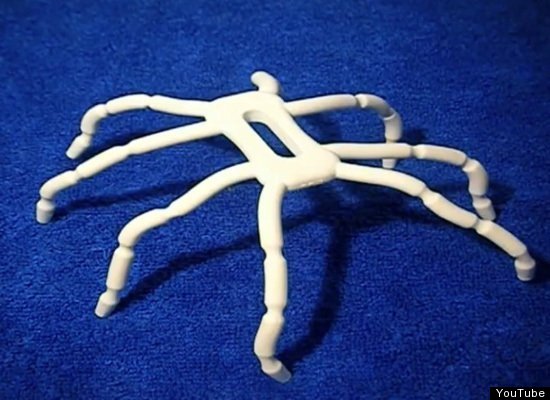
Does this look like a sternum to anyone else? Huffington Post tells me it's supposed to be a Breffo Spider PodiumTablet, but to me, it looks like the front part of a ribcage with an ipod dock in the business end.
Usually I like this sort of thing, but this is just creepy. It makes me wonder if the next wave of steampunk-like fervor will be bonepunk... technology and bodies, fused in strange concoctions like this one.
Subscribe to:
Posts (Atom)